
My earlier entry on the problem gardeners are having with the aminopyralid herbicide residue in manure has had more response than anything before. It seems growers up and down the country are suffering. Many didn’t have any idea what was causing the problem and though it was just them. Now they’re realising it’s a lot of people and the penny (or great big hobnail boot) has firmly dropped.
UPDATES:
- This herbicide is suspended please see: Aminopyralid Herbicide Suspended
- For help on coping with contaminated manure : What to do with Aminopyralid Contaminated Manure
This patchiness can be caused because the manure is not evenly mixed across the whole bed or because some of the manure contains animal urine contaminated with aminopyralid and some doesn’t.
The potato on the left is normal and those on the right are affected by the weedkiller contaminated manure.

On the photo below you can see the characteristic curled and stunted leaves on the plant.

A close up of the end of the curled leaves at the end of the stalks. Once you have seen this it is hard to mistake it for anything else.

 The photo on the right is a close up of a runner bean plant in the same bed as the potatoes, affected by the manure.
Don’t forget that aminopyralid not only effects potatoes and tomatoes but also:
- Peas & Beans
- Carrots
- Lettuce
The yellowed leaves show that the plant is unable to utilise nitrogen and the lack of new leaves as the plant is literally starving despite nutrients being available.
The whole row is affected and showing the same symptoms.
The photo below is the runner beans in the row. Mine are halfway up the canes now I understand these were started in pots but haven’t moved since being planted out.

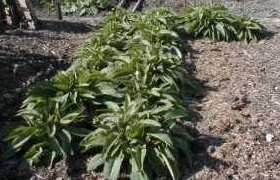

Not just potatoes and beans, my tomatoes are badly affected. This is of particular concern as they are normally eaten uncooked. Not that the remaining ones look as if they are going to bear much fruit anyway!
Thanks for all the help as I couldn’t work out what was the matter.
I read about the problem in the Observer 29th June. We’d wondered what was the problem with this year’s runner beans, which were the same seed retained for several years. we’d used composted stable manure from Wyevale, as in several previous years. My email to Wyevale was replied to, with an agreement to refund the cost. This I’ve done, but the customer services at Bressingham had no idea of the problem, and were still selling the stuff!!
I was interested to see your items on contaminated manure. There are a lot of horses in our area and at the local allotments we get a lot of stable clearings given to us. I know that some of the farmers round here use some strong stuff for killing bracken, thistles, etc., so there is a concern that the horses could be out on grass that has been sprayed.
We don’t seem to have a general problem, but a three adjacent potatoes in one row failed to come up even though they were well chitted, and odd lettuces in another bed have failed to grow, going yellow then dying, even though the ones on each side are growing perfectly. Swedes in a bed which hasn’t been manured for two seasons but was dressed with Growmore are all growing like mad, but those in a bed which has had stable manure are patchy.
Just as interesting were my bedding plants. One batch of trays showed poor germination and slow growth, with asters having a kind of leaf curl similar to your affected vegetables. The other batch have been first class. The batches were planted in compost from two different bags of the same variety of commercial compost from the same shop. It raises the question of whether this contamination is more widespread, and if it is getting into commercial sources as well as home made compost.
My tomatoes are looking suspiciously like they are affected by the weedkiller found in manure, I couldn’t make out what was wrong with them. The thing is – they are being grown in grow bags, is it possible for contaminated manure to be used in commercial growbags ?
This explains why the leaves of my salad potatoes are so stunted and curled. No wonder too that my broad beans and first sowing of mangetout were a total failure – I’d been particularly generous with their manure!
I went WH Smiths and had a look at the garden magazines. Each one had a small article about aminopyralid with some advice from the RHS, but all of them seemed to blame “contaminated manure” and only minimally describe the damage and implications.
This isn’t only about contaminated manure. It is about contaminated crops and soil. The horses/cattle are not necessarily grazing pastures sprayed with the herbicide, eating the sprayed grass, and passing on aminopyrolid as a direct by-prduct. They may be eating hay or horse food made with crops that were grown months or even a year after that same pasture was sprayed with the herbicide, but the herbicide is still active. So it is the soil and crops that are contaminated. The manure contamination is only one by-product of this disgraceful situation.
This may seem a small point, but if the public think it is only the odd bag of manure that is contaminated, or that stables are being irresponsible or whatever, we are missing the point. This is not a case of a “bad batch”. This is a case of a chemical company marketing a product that is so potent, and so long-lasting, that it has enormous consequences straight down the supply line for an indefinite amount of time.
When I speak to horse food companies, they say, “Oh, we never spray the alf-alfa.” I believe them. But what they don’t say is “We never spray the field in which the alf-alfa is grown.” They spray, then later they grow and cut the hay. The hay they cut may never have had a herbicide on it, but it comes from the field in which a herbicide has previously been sprayed.
A lot of the time, fields are not sprayed at all. Corn fields (maize) are more likely to be sprayed. But then later they use that corn field for hay. Not a problem, unless you happen to have sprayed with aminopyrolid and the soil is still contaminated with it.
If aminopyrolid survives 3 years (and we have no idea really how long it survives) in our manure that is “contaminated”, then you can bet it survives in the soil of the fields in which hay crops (and silage, straw, etc) are grown. It becomes very difficult to know what the horses can eat that will not produce contaminated manure. So even though Dow may claim that the herbicides in question have labels which declare the problem with handling the manure properly, they do not address the question of what to do with the manure of animals fed hay from fields which have been sprayed even before that hay crop was grown!
There is no information to those animal owners who buy the hay. They do not get a label with their chaff or hay or horsehage which declares that the product they are purchasing has been sprayed or has been grown in fields previously sprayed with aminopyrolid, so they better be careful what they do with the manure. If they did get this information, they’d never buy the hay in the first place!
This issue is a large, environmental issue, not a case of some contaminated manure. Soon, much of our manure will be contaminated unless these herbicides are either withdrawn from the market or used in such a manner that no animals eat the forage from fields that have been sprayed….possibly even three years ago!
As a horse owner who understands just how difficult it will be to source hay and coarse mix from “safe fields”, I would urge people to do as much as possible to broadcast the scope of this problem. The three websites that come to mind are the following:
http://www.pesticides.gov.uk
http://www.environment-agency.gov.uk
http://www.defra.gov.uk
We must also not forget to write to DOW, itself, to our MP’s, to the Smallholding community, the Green Party, and to the WWF. The more we do early, the fewer problems we will have later.
Okay, putting away my soapbox and getting back to work!
I have been an organic vegetable grower for over 20 years and have always used home grown compost. Recently I thought I would treat myself and buy some cow manure from my local allotment supplierto improve the soil texture as I have sandy soil. Since applying the manure everything has failed except courgettes and cabbage. Aminopyralid I think is the cause after the recent press exposure. Dow Agricultural say not to eat anything that has come into contact with their product and the land is not safe to use for at least 3 years even with extensive rotavation.
I’m sure I am not the only one who feels devastated.
Also friends of mine who have grown this year in gowbags have experienced similar symptoms. Has this chemical got into the growbag chain – how do we check what is safe to buy or eat? Who will be held responsible after the buck has been passed?
I read an article about this problem some time ago in a gardeners newspaper and thought it was something of an isolated case – now it obviously isn’t. So far I seem not have any problems – so heres hoping things stay just as they are – for me!! Best of luck to all gardeners suffering!
Although it’s a problem this year, does anybody know if it’s still going to be in the grond and causing a problem next year?????
Just to update – DOW & DEFRA have now decided that there is no risk to human health from eating crops grown in ground contaminated with the toxic manure.
That’s a great reassurance isn’t it? (sarcasm)
The purpose of growing your own is, to many people, to provide food for the table without pesticide or herbicide residues. Or at least to know what they are and what level. They make a choice about spraying.
Obviously this means that we are going to be eating crops containing a chemical that breaks down in our gut. Is it absorbed by our body? What is the effect likely to be over 10 years? 20? We can’t know, it’s not been around long enough. So we have the best guess.. er extrapolation .. the scientists paid by the manufacturer can come up with.
Anyone for DDT? Asbestos? Have a cigarette whilst you think about it. They were all considered safe.
Any claim of negligence in this issue should surely be laid squarely with the chemical manufacturer – Dow Agro Sciences.
In this instance the branded chemical most widely implicated with this issue is Forefront of which one of the active ingredients is aminopyralid. This is the active ingredient that has caused the problems and is used in other branded chemicals (as mentioned by others above) within the Dow Agro Sciences product line.
Forefront is a hebicide used to control thistles, docks etc in grassland. It is prescribed by the agro chemical indusrty intermediaries (the professional agronomists)for this purpose. See web address below for details.
http://www.dowagro.com/uk/media/grassland/20060203.htm
The guidance on use of Forefront states that grassland sprayed with Forefront can be fed to livestock 7 days after spraying. Approx two years ago the label advice indicated that the vegetation should not be composted. Question – What farmer would as the sprayed produce is to be used as animal feed (i.e. within the label guidance provided).
The latest product label provided for Forefront is revised from that of the original labels from approx 2 years ago. It is evident the latest product label sets out a process to avoid the present situation by indicating that the excreated material from livestock should not be composted into maure for the use on susceptable crops. This revision is too late for when Forefront was first used over 2 years ago when it is surely reasonable to assume that a product cleared to be consumed by livestock would not pass into manure and then into a future growing crop after residing in a manure heap for at least 12 months.
We can draw our own conclusions but mine would be aminopyralid has a lasting potency not realised by the Dow Agro Sciences at the time of marketing. Although there may be no long term effect on vegetation/soil an unreasonable situation has been created. This product should not be marketed.
I live in Mellis, Suffolk, and have all the symptoms you describe, curling stunted runner beans and potatoes. Broad beans variable. We have horses and a farmer’s field runs down the northern boundery which is sprayed but I don’t know what with. So I shall follow the trail of the hay supplied as we use our own horse manure.
This is scary as we eat the veges all the time.
For those of you who don’t read the Guardian you might want to check out the link below.
Regards
Mark
http://www.guardian.co.uk/environment/2008/jun/29/food.agriculture
The latest regulatory update on the scourge of our plots, inlcuding links to contact dowagro:
http://www.pesticides.gov.uk/garden.asp?id=2480
I have called a firm asking for analysis of the actual produce to see if the residue is present and how much is there. They are called Bodycote. 0121 206 4120. Adam.
But he says they can only work for a commercial organisation.
I thought I might try through a local garden centre. As there are so many of us effected we should get some kind of answer. I hate the thought of burning all this years veges!!
Mountain Heath laboratories are trying to develope a reliable test to see if the vegetables are contaminated. They have agreed to test a contorted broad bean for me. I can only afford one test. £100 each. You might like to send your own in and we can share results.
They are having difficulty extracting the aminopyralid from the plant material so a test showing none present is dodgy. They are not charging for tests showing none present until they have got it more reliable.
If I get contamination confirmed the next question is how toxic is that?
I have only just started with an allotment so am a bit concerned that it takes years to get one, it can all be a waste of time by adding what nature, and man has been using for hundreds of years. I remember my grandparents saying that they used to nip out with bucket and spade when the horses went by. Its traditional and the first thing I would think about to enhance the soil.
I want to grow organic, the ground I am on has not been worked for 20 years, and so I am starting with fresh soil. I want my kids to eat good food, I am in my 40’s and only knows what has been added and sprayed on the food I ate as a kid.
Fortunately, I did not use manure this year and think I will steer clear. I used mushroom compost though. Is this ok? I have a feeling that it is not but have not seen any problems.
In addition, what about chicken manure, surely the chickens eat crops grown on ground that has had this chemical.
Unfortunatly it is a product of the times along with GM food and the like. If more of us were given allotments (the waiting list is a joke) then we would not need to spray and fields to get the max from them and I for one do not mind removing the odd caterpillar from a cabbage.
We must stop the use of most chemicals not just this one.
We put some stable manure, which we got in May, on just one bed. All the other beds had already been treated with the manure we got in October from our regular supplier. Vegetables grown in these beds have been fine. In the bed with the stable manure, we have had problems with our runner beans and courgettes. The first lot of runner beans just seemed to dry up and disintegrate. The courgettes – and we never have a problem with courgettes – have just not developed or grown, they are just the same as what they were when we put them in. The worst thing is that this stable manure has been coming up to the plots trailer after trailer full and everyone has been putting on their plots or in their midins. Maybe the saying ‘muck for luck’ doesn’t quite ring true anymore.
I have rabbits and I buy some straw from a super market only a small block of compressed straw is what I have used for practically the whole year, cos now I shred my paper in the home and use this for rabbits bedding but the straw that I have used this year would that be affected by the pestiside would you suggest to get rid of the compost bin contents or how would I find out if the compost that I am making is any good any ideas, as the compost that I have made from last year seems ok the potatoes are fine look very healthy all the other veg are growing well asn have been eating my baby letuce, any ideas thxs cos I am new at this making compost ut realy gettin into it now thxs colin
It’s just way to scary for words – why is that Johnny Consumer is always the last to know?
Thanks for the leaflet, very interesting reading.
I am particularly concerned about the problems people are having with contaminated manure. | am secretary of a gardening club where we have recently had access to an allotment. We were only able to get onto the allotment in March and after having cleared the ground of weeds etc just went ahead and planted up the usual vegetables, potatoes included. My main concern is that once the autumn comes we will need to clear the whole allotment and enrich the soil heavily with manure. At the moment the manure we have obtained that is rotting down in the compost bins has come from a friend who owns a couple of horses who are kept in a mountainside paddock.
It seems the contamination that is affecting the manure is as a result of the use of pesticides. As the paddock is on the mountainside, I would be interested on anyones views as to whether or not they feel the manure we have stocked in readiness would be likely to be contaminated or not. I am rather hoping that we will be contamination free because of the source of our supply mainly being a known supplier and the more ‘organic’ food provision.
Please tell me I am not barking up the wrong tree!!
Shelley
ref potato damage using aminopyralid contaminated manure….. we too on our site [humphry park allotments urmston manchester] have suffered from this terrible chemicle… best hope is to BAN all usage on animal and cattle land or better still ban completely!!!!!!!! get all your friends ,colleagues to contact their MP,s as soon as possible, d j h [H P A A]
g,day colin i also breed rabbits 60 newzealand whites and brit/giants,and mini rex and floppy ears,we done,t av your problem out here in auss,but last year i lost 48 rabbits they were 11 weeks old, at 12 weeks that is when i dress them for sale,they got mixomytotis from the hay i bought from local grain store,apperantly the fleas that carry the deseaes can live for upto 2 years in the hay,it upset me real bad looseing so many,so now i done,t buy hay anymore i only buy oaten chaff for horses its treated,also i buy hefeir developer pellets they are half price of rabbit pellets,bad news to what you are having back home nogood.goodluck to you all.kenny.
Contaiminated 18 month old manure has wrecked crops in many vegetable gardens in my small hamlet, which will have a lasting effect to those household economies.
I have my doubts that soil bacteria will break this weedkiller down by next season, as the manure appears not to have changed physically at all as I dig and remove affected potatoes, and runner beans.
The same manure has been used by the farm on their cereal crops.
Do Dow/DEFRA MEAN there is no risk or is it a matters of SEEMS to be no risk – as they said about the animals eating from treated fields? How long to we wait to find out?
How long have they researched this – I can recall thalidomide which “seemed” to be harmless!
we heard recently that someone on our allotment site had a problem with this, however, we have free manure delivered to our site which I have used before…..but haven’t this year…but I did buy a few bags from our local garden centre… because it looked rich….we have had no problems with that ….but I fear we were just lucky this time ….don’t know if I will ever use it again..given the widespread problem
Spoke to our allotment officer here in Northampton
they were not aware of any problem.
What chance have we with people like this controlling
our sites.
They are now !!!!!!!
Message for Shelley, look up ‘aminopyramid’ on Google. You will see that the homonal herbicide is in about 7 makes of spray that farmers use. If your hay supplier hasn’t used any of them you should be OK. It seems that most have.
OOps
I mean ‘aminopyralid’.
I have noticed on my allotment that we seem to have been spared may be due to the local farmer not using the dreaded fertiliser. However I have a courgette in my cold frame where the corguettes seem to be going all pappy on the ends when getting to about 3 to 4 inches long on the plant. Does anyone think this could be from the same problem? Thanks.
Is there a test kit to see if the manure is toxic ?
For 23 years I served in Min of Ag as a Chartered Surveyor. Much of my time was spent in initiating the conservation measures now regarded as common place. I am appalled to here of the problems with this chemical. I am certain that it should not be permitted on the market. Even if the pasture for the grazing animal has not been sprayed what about the feedstuffs such as hay? Does the supplier of the FYM even know if there is a contamination problem?
In my view there is a strong case for a class action against Dow Chemicals. Is there any chance that we could take legal action. Rylands v Fletcher seems to have a direct bearing
I think Philip has it the nail on the head. There has been scant regard by dow chemicals and the PSD regarding compensation. Besides the actual cost of replacing lost crops. The time effert and upset should also be taken into account.consideration should be given to the frustation and heart brake it has coused to gardeners up and down the country.
The problem is widespread. I have an allotment in Liverpool, and a number of plots are affected, particularly those growing runner beans and potatoes. We have a lady who visits regularly and delivers stable manure at a reasonable price. That’s her business dead for at least 4 years, I believe. I would have bought some manure this spring but hadn’t sorted my compost heap. A lucky escape.
I think compensation is due from Dow Chemicals and a class action is a good idea. Surely hay can be grown without contaminating it with pernicious herbicides?
Message for Shelley and others about using manure which may be suspect: your ‘mountain pasture manure’ sounds fine but you could leave it stacked for another year, if in doubt.
How about sowing winter tares or some other kind of ‘green manure’ on all the land you clear between now and September? It’ll grow a few inches high and stand all winter. You dig it in in spring. It won’t seed all over your plot. I tried it last year and found crops growing very well this season. I sowed some broadcast and some in drills, which was fiddly but digging in was easier. Try googling ‘winter tares’ for a supplier. There are other green manures, if you don’t fancy tares.
About testing affected plants or suspect manure; there’s a firm which will test your manure/soil for £180 a go, with 35 days’ turn around. How? By growing tomato seeds in it and seeing what happens……. For £180? What is the world coming to? The firm does this, by the way, because noone has yet devised a chemical test. Perhaps Dow Chemicals could get on to it and send us all a free testing kit. (Not tomato seeds).
I have had the report from the laboratory and it is inconclusive. They explain that “the problem arises in getting the compound out of complex matrices, such as composts, manures, certain crops, and soils with a high level of organic matter. Dow, with whom we have been discussing this, are also struggling with the issue.”
So there is no good test yet for contamination in the vegetables. Glad to read that it is coming off the market.
hi -i have just taken over plot that have been subject to manure -pestaside scandel crops disformed etc and i have turned over the soil but what advice if any can anyone give on the problem.
is it safe to plant this year……
The saga about contaminated manure carries on.i first noticed problems on my plot about the first week in june.
I eventualy got the pesticide safety direcrtorate to dispatch a man from yory to take samples. The contraption they use to isolate the herbicide costs thousands of pounds to develop and instal. I honestley dont think there are many labs who have the equipment or knowhow to check for traces of Aminopyralid or any other herbicide.Dow agro-sciences know this.Hence lack of evidence if legal action
is being considered.
I have also had a problem with rhubarb which was top dressed with contaminated manure in spring 2007. The 2007 crop showed the classic leaf curling and the leaves were much smaller than usual. This year there were still slight signs of curling early in the year but now the plant looks healthy again. Question is, is it now safe to eat?
hi there. last year on my allotment my potatoes and peas and also my sweetpeas had the curly leafs on them and i put it down to the muck i got from a farmer ,he said it was old muck but when it came it was half and half old and new ,iput some in the trenchs and that was the result the potatoes were poor and also the peas ,ive not used it this year onty old compost and had a bumper crop ,the only thing is ive got a cyst on my eye and was wundering if ive picked of the allotment?davi stockton.
Try using Pig Muck instead…..they don’t eat grass.
I had this problem with compost.Two years ago and again this season.I have been given to understand that it is something that has been sprayed onto the compost material.
I have had no problems with potatoes/beans etc but the manure I used was bagged and from a garden centre. However,like some of your correspondents, I have had problems with tomtatoes grown in growbags and crops/plants grown on in bagged composts from garden centres. I even had a young Goji bush plant shrivel up and die, as did my peppers etc, but one I planted directly into the garden, containing my own compost, has thrived! I hope that this can be resolved quickly.
In summer 2007 i bought 10 cubic metres of “50% well rotted horse manure/50% loam” that looked very good and spent ages wheeling and spreading 230 wheelbarrow loads. Since then i havent been able to grow many veges, last year it was a write off, this year i get almost nothing. now i am worrying about fruittrees that i mulched with about 4 inches of this stuff. all along i thought i have just spread too much and the RHS told me in 2007 it was just a balance problem or “sour mulch”. I tested the pH it was normal. Now 18 months after i spread the mulch i figure i am in deep trouble, do i try and scrape it off from around the plants. For example the Autumn Bliss raspberries. I mulched them and then they grew fine, but this year, i assume the stuff is getting down to the roots as they have all gone yellow and stopped yielding. Even after many digs my vegetables are only just beginning to recover a little. My onions all died. At least i now have a hypothesis, but no useful diagnostic test for it. What can we do?
Peter
Please note the updates at the top of this page.
Greetings from the USA…I’ve been lurking; hope you don’t mind. Thanks for all the work and info on aminopyralid (AP) contaminated manure. I feel your pain…I have your pain. Garden is ruined (stunted plants, curled tomato leaves, non-formed radishes, 4-month old carrots an inch long, bean leaves yellowing and dropping, etc. ad nauseum. I do find the “test” for AP that consists of planting tomato seeds in the muck and see if they grow deformed to be absurd. There is a test for AP down to 1 ppb. I recommend an article titled “Use Caution When Harvesting and Feeding Ditch Hay” by the U of Minnesota Extension Service. Please note: Morse Labs of Sacramento, Ca. no longer does this testing, but apparently Anatek Labs still does (www.anateklabs.com) They have their price sheet and list of tests available right there. A test for AP is $150 US I believe; I assume there are similar labs in the UK? (The EPA test methods are either 505 or 515.) This pyralid (variations) problem has been known for many years, it appears. This really sucks to get hosed like this and have contaminated soil for at least two more years, IF you’ll ever trust it again. I feel sorry for us all. FYI: I assume you have read the scientific article “Aminopyralid Contamination in Farmyard Manure” by Dr. Eric Crouch of East Sussex. Also, “Aminopyralid (You got herbicide in my fertilizer!)” speculates on why this stuff doesn’t break down in the digestive system of the ruminants that eat contaminated grass, for the chemists among you. A ray of hope: if this AP can pass through a cow’s many stomachs intact, maybe it can pass through one more stomach as we eat contaminated produce! Lastly, I have sent manure samples to two different labs for analysis and don’t expect to hear anything for several weeks unless someone put a rush rush on it, so I have nothing more to add. Keep up the good work. Thank you.
I have grown organically on my allotment for well over 20 years, but this year I had run out of my usual manure and bought in three sacks of “Country Natural 100% organic manure” from my local branch of Hilliers Garden Centres (Winchester in Hampshire) and dug it into my greenhouse borders. Most of the tomatoes grew reasonably well at first, but two didn’t and then many of the others manifested the curling and cup-shaped leaves typical of hormone weed killer damage. After reading about Aminopyralid I contacted Hilliers (who knew nothing), then the suppliers of the composted manure. The supplier was helpful and concerned and admitted mine was not the first telephone call about this problem. His manure comes from, amongst others, the Metropolitan Police stables and the Household Cavalry. These and his other suppliers insisted that the feed they gave their horses was not treated, but obviously somewhere along the line there was a problem. Two of my tomato plants have died, others have leaves that seem to be growing out of the curling stage. Most of the plants have a huge crop of tomatoes. All the emphasis seems to be on vegetables/fruit and ornamentals – the fact that cows eat the contaminated grass and then produce milk, milk products and meat seems to have been overlooked. Tests have been carried out which have established that residues of Aminopyralid have been found in the livers, kidneys and I believe milk, of some animals and the government is rather belatedly issuing guidelines on maximum levels. Dow Agro should be held accountable for their appalling product. The government wishes us to accept GM foods, but an American company can produce something so destructive and either know little of its long-term effects on other species, or choose to keep the knowledge quietly hidden in the fine print.
Hi,as an amateur gardener and grower of Tomatoes, Potatoes, prize Chrysanthemums and many other odd and sod plants, I have too experienced the curled up leaves on my Tomatoes and Potatoes, also poor crop returns.
I have also been a metal detectorist for a number of years, and the number of fields I have walked on which have been swamped with raw slurry, beggars belief.
After reading many of the comments made I do think it’s time to act now.
As I only use compost from reputable garden centers and large stores it appears to me that it has not been my poor quality management techniques, but the poor quality of the compost that I used. All my plants are grown in pots, large and small, buckets and tubs.
I have not submitted my name because some of the farmers who have given me permission to go onto their land could withdraw it if these comments were conected to me.
So, just call me detectorman.
Having just read your very interesting article on herbicide residues in manure, I feel that I must pass on my findings. I am a large scale sheep farmer in Mid Devon, and being a predominantly grass based farm, heavily reliant on clover for nitrogen fixation and all the bonuses that brings, we were dismayed when our product of choice Legumex( a clover friendly herbicide) was withdrawn from use. We are continuosly battling against weeds such as Creeping Thistle, Dock, etc, and after a high profile ad campaign by Dow we tried Forefront (aminopyralid). We knew it would kill clover but we then oversow clover seed into the sward, but when I read on the data sheet that it had to have a 4 month interval from spraying to sowing clover , I was quite shocked at it’s persistency! That has certainly been the case as well and in some circumstances clover has even failed to germinate on the sprayed fields 12 months later.Then this summer we lost 5 sheep that had grazed a sprayed field, and we had observed the allowed non grazing time.(2 of the sheep were PM’ed but no conclusive findings on how they died, but it was certainly in my mind a poison effect rather than the usually observed sheep ailments!) This finally brings me to the point I am trying to make, I am also a keen gardener and have ample manure from the farm, but having had crop failures on onions potatoes and root crops for the past 2 years, I have realised that the manure was contaminated and that my organic farming method was to blame!!!!. I am now in a pickle because we have probably no “safe” manure on the farm, so will have to resort to chemical methods, for my 1.5 acre garden.
Finally with my farming hat on, I am very dissapointed for the thousands of gardeners who use manure from their local farms, only to find it is a hidden menace, I hope this will not have a negative feedback on farmers, because as is always the case, it is big multi-nationals brainwashing us into using products, that are repoprtedly safe,and I can only appologise for this.
I’m afraid it has had a negative effect on the perception of farmers. We were told that the farmers were told to warn about the manure and so we naturally blame them. It’s obvious that the warnings were hardly clear to Hefin, a farmer – after all he’s suffering like any gardener.
Fairly early last season, just after planting my beans, tomatoes etc into good rich organic manure(?), the plants showed the now-familiar symptoms of poisoning by aminopyralite. We all know why now but has anyone found out from the Soil Association or some such whether the soil is going to be safe this year? I am wary of starting my tomato plants onlu to find, at the end of May when they go outside, that the soil is still poisoned.
Our soil is predominately black gumbo (heavy clay); therefore I have heavily amended my garden for years using compost greensand, decomposed granite, manure, composed wood chips, peat, organic fertilizer, dried molasses, etc. I have a large garden and generally purchase the amendments in bulk when possible. I always speak with the source from which I purchase about my organic preferences. Living in an environmentally conscience area I have not had difficulty locating and using organic methods for gardening. This year I decided to plant my potatoes above ground in hay and amended soil. The hay I used was from bails I had stored outside for 3 years but I did purchase bags of manure compost and composted wood chip mulch. I did not have any bulk at the time and for convenience decided to purchase it from well recognized nursery garden supply. I have four verities of potatoes (Russet, Red La Soda, a blue from the grocery, and Kennebec) planted in 4’ diameter X 4’ high wire cages to which I placed the hay, manure, and amended soil. I notice 4-6 weeks ago the curling on the Kennebec potato. I asked several master gardeners to no avail and have stumbled across this web-site. Now I believe I purchased bag manure or mulch with aminopyralid contamination. From reading here I think it might be the manure. I pose a couple of questions for someone more knowledgeable than I about this issue. Can hay stored outdoors for several years hold the contamination? The hay was given to me and I am not sure of the source. Will the potatoes develop and if they do are they safe to eat? I will probably throw them out or remove them from my garden. Thanks for any help you may provide.
I have been spreading infected manure all over my garden and allotment. Spuds,toms and beans all ruined. BEWARE!
11 May 2009
After a disastrous year last year with contaminated manure, i chose this year to plant my tomatoes in the greenhouse in grow bags bought from B&Q. Already,some of my plants which are 18″ high are showing the typical sins of contortion and curling.
I am not happy.
No manures have been used
Does anyone else have any information or symptoms yet.
Surely I cannot be the only person affected.
My potatoes, broad beans, peas sown into manured ground are destroyed! The leaves are curling and distorted and failing to grow.
I got my manure last winter from a local stables who assured me their animals aren’t grazed on sprayed fields, but did admit to buying in winter hay.
My problem is that I have a lot of plants growing on in cold-frames which should be planted out very soon. How can I decontaminate the soil and if so can I do it in time?
hi
happy i found this thread as it has put me out of my misery , i noticed my spuds were showing the symptoms in this article. my second year at the allotment, first time i have used manure.
sweetcorn , beetroots, spincah looks OK as do the leeks. i will plant my reserve courgettes in a new plot.
show i use the produce that does grow ??
just exactly how much ‘exstensive’ testing do these companys do on their products? obviously the term ‘food chain’ hasnt been heard of!
This issue is still prevalent, I have a ruined 3 acre plot because I saw a sign saying “free manure”. The equestrian centre has been told in writing about the issue, yet did not warn me and still has the free manure sign up with no warning.
Dow chemical should be made to pay for our ruined crops, and banned from selling this poison!
Couldn’t be sure about some of my failures – last summer was so bad that I wasn’t surprised that my outside tomatoes rotted on the vine. This year had been going well until I put some dwarf french beans into B&Q peat-free compost for a late harvest. I’m already eating the early crop grown in a previous batch of the same compost bought months ago. The new beans are coming up wrinkled and yellow. Worse – I repotted my 20 year-old ginger plant in the same compost and the leaves have turned yellow and are dying back. I’ve been complaining to any government department which will listen and will go on doing so until I get answers that satisfy me.
So … Looking to the future … has anyone been given a sensible course of action to take in order to combat this devastation???
What are you doing with your plots ?????????
So far this year only ‘pockets’ of this has appeared on my plot. Spuds looked like photo above, runners just didn’t! and turned yellow and spotty, the beans such as they are all curly like the leaves! I have not yet dug the spuds.
Having had an immense amount of rain the bean growth has improved and returned to more like normality !?!? What is interesting is I have 4 varieties growing and White Lady has weathered the ‘storm’ better than ther rest! This indicates some varieties might be more immune than others ?????
Re the ‘pockets’ … the farmer where I purchased my manure has horses at livery … he does not supply hay and has no idea where his clients buy theirs. That is why infection seems to be very spasmodic in my supply.
It would seem a waste of time to try to track things backwards. It is clearly out of control. Better to raise awareness in every direction …
…. and to plan how to cope with it once infected!
I have had the same problem as you. I found that my water butts had been contaminated by washing my hands and vegetables that had been in well manured soil. I believe the contamination was due to aminopyralid. Make sure all water butts are thoroughly cleaned, including watering cans.
Hope things improve for you.
Tom and Kath from Bury Lancs
Thanks for this site. I had used some Forefront to kill some thistle in my pasture, A neighbor had given me some to try. I Then used the same sprayer after only lightly rinsing the container to make up some Roundup to spray a area of grass that was going to become our garden. Well nothing is growing well this year, leaf curl or stunted growth if at all and a large lilac bush and Catulpa tree next to the garden are now turning brown after having the leaves curl. I coudnt figure out what happened until I read this site. It all makes sense now. Go figure the weeds are doing well that came up from seed. I never use Forefront again.
Dear Mike
Do you realise that you and your neighbour have broken the law. It is illegal to supply agrochemicals if you are not a registered and certificated supplier. It is also illegal to use a professional farm product on a garden.
I have little sympathy for you. What do you expect when you say you lightly rinsed the container before using Roundup (was this a present also) By the way where did you drain your sprayer washings, down the drain?
Perhaps Mike’s experience is the perfect reason for banning this chemical – no matter what the legal position, these things get misused.
I do have some sympathy – people just don’t realise how powerful these things can be. Surely a trace can’t do that? But it does.
I have found the same problem in my garden this year. Plants seem to grow but not thrive. Potatos are curling just like the picture. Tried to get help from Dow Chemical but all they tell you is that you need to do a test which consists of growing bean in pots with a control. If they copme up the same way in the bad soil then you MAY have the problem. Seems they are afraid opf litigation as they do not want to commit to anything. All I want is information. Anyway, it lasts longe than a year as the place where I had manure last year is still killing things. Even my corn is yellow and dying.
You’re not the only one to suffer this year Steve – I have devoted a few pages to this problem on my website which may add some information to that which John has provided.
I have set up a new page for 2010 victims reports – as people began to email me describing what was happening to them this year. It’s a page that I hoped wouldn’t be needed. Anyone who would like to have their experiences added is welcome to email me.
I would also contact the CRD and let them know about your problem and DOW’s response.
I have problems with tomatoes in growbags yet my second sowing are ok is the compost that i filled the pots with contaminated. I used a different compost for my second sowing. The grow bags all came from one source and purchased in one go how can compost be contaminated
Well, I’ve just discovered what the problem in my garden is – finally. The variation in effect is what has been confusing me. However the source is still unknown. Other allotment owners have been using the manure heap I applied this year for a couple of years – I checked out their veggies and all brassicas thriving, pots all look great, but one fellows broad beans, while tall and looking reasonable, showed some tops leaf curling that totally ruined my crop. My squashes fail to thrive and some just wilted off and died. toms were looking great there for a bit, but now the tops are all curling. All the leafy greens are just fine, including my lettuces.
I now suspect that the peat-free B&Q compost is the culprit, but wonder why the beans are major sufferers when legumes can fix nitrogen for themselves. guess this poison not only interferes with uptake of N, but also with its metabolism.
Main question is – what is/is not safe to eat – if the crop looks great, like my brassicas, should I still not eat it, or is it OK cooked? I’ve been consuming loads of lettuce/salads as well as chard,beet spinach, kales and spinach so far. and now what do we do with our plots???
clas action against B&Q – anyone??
Hey Bob
Did B&Q take any responsibility for your crop failures – they’re still selling the stuff in 2010 and I now suspect that the compost is the cause of my problems rather than the manure I applied as others manure users crops appear to be fine, at least their potatoes are looking good. I didn’t see any toms or squashes on their allotments, so can’t tell what is/isn’t affected, but I used 50:50 B&Q’s peat free with my own homemade compost for sowing and potting on ALL my plants this year. some appear much worse affected than others and suprisingly the beans appear the worst of the lot even though they had the shortest time & amount of the stuff before going out in the ground. toms and aubergines which were successively potted on in the same mix before being put in well manured soil appeared to be doing just fine and only recently Ailsa Craig toms are showing effects while other varieties look well. My affected plants show different effects – leaf curling (toms broad beans and french/dwarf beans), yellow leaves and no growth (peas and some toms), wilting and dying off with rotted stems (squashes) so I’m still unsure whether it is manure or B&Q compost. all very strange.
I was hit bad in 2008 and decided to source my own manure this year instead of going throigh the council…Well the muck I found was five years old and almost looked like compost. I had a couple of loads delivered and everyone on the lottie commented how good it was so they had loads…And yep, the herbicide is still present even after 5 years…
is there any way I can speed up the decontamination of the soil
and should contaminated crops be dug up and burned or what???
crops that dont show signs but have also been fed the same compost made with contaminated manure are also presumable affected even though there is nothing visible
any advice experience welcome
Have you tried reading For help on coping with contaminated manure : What to do with Aminopyralid Contaminated Manure that is referred to in the main post at the start of this entry?
There is no magic bullet, just keep mixing with top soil until the microbes eat the darned stuff.
Another example why chemicals in any form are a bad idea.. Artificial is never good.. When will ppl learn! My guess is never when theres a profit to be made!
This remains a problem and will be throughout 2012 too so you MUST find out the exact provenance of the muck you use.
Both cow and horse manure will continue to be prone to contamination as the Dow AgroSciences product Grazon is still widely used to eradicate broad leaf weeds from pasture land. Grazon contains chlopyralid and the label now has a warning against composting or spreading either clippings of or dung of animals fed on sprayed pasture and states it will damage potatoes, tomatoes, beans, peas, lettuce, endive, carrot and sunflowers. ie solanacea, leguminacea, asteracea and umbelliferae. They are sensitive to as little as 10 parts per billion (yes, billion). The information sheet says the half-life is 12-62 days but it seems like people are still having problems after 4 years.
There are other chemicals too. This University of Ohio report http://ohioline.osu.edu/aex-fact/0714.html highlights another Dow chemical called Picloram plus numerous others that have turned up in small but deadly quantities in domestic compost.
The good news is that the chemicals themselves are not supposed to be toxic to you or I or the onion family, so you can enjoy a slice of Tarte aux Onions washed down with a glass of chilled Grazon 2009. Yummy! NOT.
And here we are in 2014 – I am pretty sure I have bought compost from a well know chain of garden centres that is affected by this.
Stunted growth on tomato plants, no root development for other vegetable seeds.
Not happy.
I am currently a victim of this silent killer. I spread manure from a saddle club in western Illinois. I spread the manure over two-thirds of the garden, and the other third from another source of cattle manure. This was done in the winter. The entire garden was rototilled with a small tractor. I tilled with a walk behind tiller, then planted. I started with seeds for early peas, beets, radishes, lettuce, and corn in the first part of the 2/3 where the horse manure was applied. I had planted 46 of the most beautiful home started tomato plants in the middle of the 2/3. “I eat what I can and can what I can so later I can eat more cause I can.” I set potato starts in the last part of the 2/3. I planted another 6 of those same tomato plants near the house in a little patch where I applied chicken manure. I was disturbed to see the difference of these two areas, near the house the tomatoes are growing like crazy, while at the garden plot there not much growth. Three weeks goes by and I am noticing that the little sprouts that have come up from the seeds are not looking very good at all. The tomatoes look as though there are pods coming from the stems of new growth. The potatoes have stems that are splitting and are gnarled up, I wouldn’t even call it curling it is so extreme. I thought it was a water issue, as we did not have much rain. I attempted to water the area, I had not heard of contaminated manure at this point and was not even suspect of the harm that had been done.
Meanwhile the last third of the garden area where I applied the cow manure, I have planted zucchini, cucumbers, yellow squash, pumpkins, and watermelon. These were coming up and looking decent so far.
There has been lots of grass coming up in between the rows of the other 2/3 of the garden, with the horse manure, the corn is also looking very good. There is no sign of the lettuce, peas, or beets, the radishes are doing well in the one corner, but the rest of the row has died off, I think there is less manure in that corner. There is little hope for the tomatoes, as they are still alive, but only the original bottom leaves of the plant remain, the rest are just stems with small pod looking appendages at the ends. The potatoes resemble something you would expect to find at a toxic waste dump, split shoots, gnarly little pod looking things on the ends.
Side note: The tomatoes I planted next to the house, have grown to 4 feet tall and are needing additional support with fruit all over. I may have a red ripe tomato to put on my BLT by the fourth of July. An old man once told me if you can have red tomatoes by then you’re really doing good.
The end third of the garden where the cow manure was spread, is doing very well. The zucchini has exploded and is the best I have ever grown, same for the cucumbers.
There is obviously a very distinct difference in the two areas. I have not yet completed the bioassay, to in their words determine contamination, but it is started and I will post back with the results. It is very disheartening to put all this work into something to feed your family, trying to use nature friendly methods, just to be foiled by these sneaky little chemicals and someone not heeding the labels.
Truly disheartened,
Chris
Hello, here I am in Washington state and have the same problem! Horse manure.
Yuck.