
Allotment holders and vegetable growers across the country have been reporting crops failing and being killed following the addition of manure to the land. Some crops, like potatoes are very badly effected whereas others are less affected.
It appears that the problem is linked to a new herbicide (a hormone weedkiller) aminopyralid being used by the farmers.
The most sensitive crops affected are:
- Potatoes,
- Tomatoes,
- Peas,
- Beans,
- Carrots,
- Lettuce
The list is not exclusive – these are just the plants most affected .
My understanding is that the product is licensed for use on grass land but is not licensed for use on wheat etc although anecdotal evidence suggests it is being used on cereal crops despite licensing restrictions.
You will appreciate that I am being careful what I say about a product that a large chemical company has spent more than $80 million bringing to market with a large and powerful legal department.
The active chemical, aminopyralid, is present in:
- Banish
- Forefront
- Halcyon
- Pharaoh
- Pro-Banish
- Runway
The residues are getting into the manure by two routes. Where grass land has been treated with aminopyralid containing herbicides and cattle or horses grazed on it, the chemical is excreted into manure. Dow actually state that ” Aminopyralid is water soluble and is excreted in urine relatively rapidly”
The other route is direct from straw used as bedding where the crop has been treated.
The net result is that we now have to treat manure as a potential problem. Stables and many cattle farmers buy in their bedding straw and, although they may be able to state they have not used the product on their grass, they may not know that aminopyralid has been used on the bedding.
What to do if Your Crops are Affected
If you think your plants are being affected then the first call should be to the person who supplied the manure. If possible they should try to confirm whether an aminopyralid product was used on any grass, hay or silage fed to the animals which produced the manure or on the bedding. They may need to trace the original source if the grass, hay, silage or bedding straw was obtained from elsewhere.
If you are reasonably certain that aminopyralid was used, then Dow AgroSciences should be contacted for further advice at ukhotline@dow.com.
There is an FAQ on their website here
How long is the Manure / Manured Soil Contaminated
This is an incredibly potent chemical, effective in small amounts. How long it remains potent in manure is dependent on how much was there initially and other factors. Probably, and only probably, it is safe to plant in the third year after application.
If buying in manure that may be contaminated, then I would test it by mixing 50:50 with a known multi-purpose compost and trying a tomato plant or bean and seeing what happens.
If you think it is contaminated, compost for a year or three and re-try.
Are the Crops Safe to Eat?
Dow spent an awful lot of money getting approval in the USA and EU. They state that: “Aminopyralid does not bioaccumulate or build up in animal or plant tissue. ” They also state “Animals high on the food chain… are not expected to acquire concentrated doses of this chemical by feeding on contaminated plants or animals”
Even non-organic gardeners like me seek to minimise our uptake of pesticide and herbicide residues in our food and we have seen products – even medicines – heralded as safe withdrawn when unexpected side effects appear as the product goes into general usage.
Comment
When time-tested safe herbicides like Amcide (ammonium sulphamate) are de-licensed it is galling that a product that can have such devastating long term persistence and transmission via the food chain is approved. The irony is that this will particularly hit organic gardeners who use manure to avoid the use of direct chemical inputs.
Please note if commenting that I will edit / remove posts that could make me liable for legal action.
Finally thanks to David Hampsey of the NVS for his input and provision of some research materials for this article.
UPDATE
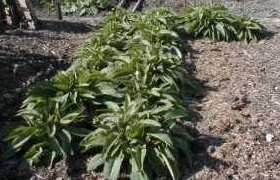
I’ve taken a few photos of the effects on a plot on our site to help with identifying the problem – Contaminated Manure Update

thanks for this info had allotment 9 yrs never even used slug pellets whole allotment contamanated produce ruined no spare ones to take on never feel safe growing on plot again,contacted farmer not very interested blames straw he brought in thanks again
It seems that in their tests Dow tested for how long aminopyralid persisted in the soil after treatment. Given this, could it not supply a test kit to enable people to discover if the manure they are buying or selling is contaminated with this chemical?
We live in North West Lancashire. We had muck delivered last autumn by a local farmer (who supplied us also last year) and spread it around our garden with devastating effect on raspberries, potatoes, broad beans and on a recently planted rambling rose all in our vegetable area. We put the muck around the main garden too but it doesn’t seem to have had the same drastic effect as it has on the edible crops. We only found out about the possibility of aminopyralid after reading an article in the Daily Telegraph of 28 June 2008 and have since had it confirmed. Please advise for next year’s crops. Barbara Harrison.
Manure as a mulch- fernlike leaves on new raspberry canes. Beans very badly stunted. Courgettes & calabrese planted out look OK. Weeds not affected !! Another members tomatoes ruined.Fortunately I was too busy to dig it into the rest of the allotment.
If this stuff bonds to lignin in plants even grass and does not necessarily show, how can we be sure it is safe to eat the raspberries, courgettes, calabrese. How do we dispose of the old canes and plants ?
Farmer very upset, used manure on own garden. Thinks problem from 2 years ago.
I live in Gwynedd on the tip of the Llyn penninsular. I have been growing veg for 10 years on the same plots with excellent results. I manure the plots every 3 yrs or so. Last year I spread muck over all the ground. I shared a 25kg bag of Sharps Express seed with a friend and my son, theirs have grown well, mine are stunted and leaves curled. Beans are brown and dying. Courgettes, salads, onions, beetroot and leeks are all fine. Seems to me that it is this amino pyralid problem. I will enquire from the farmer about sprays etc.
It’s terrifying how many people are being affected by this problem. I can’t see it being banned, too much money involved. Hopefully DOW will address this problem with some firm guidelines and test results so we know how long before things are usable.
Guy’s comment is really worrying – if we can’t even buy seed composts.
If the evidence points to it being this product then Dow should be subjected to a heavy fine being imposed by USA, EU and the UK, as hitting these multinationals where it hurts in their pockets, as it seems to be the only way to make them face up to their moral or ethical attitude to the general public. This could have far reaching effects on not only allotments and gardeners but also on the organic agriculture and horticultural growers.
It would help in estimating the size of the problem if contributers gave the first 3 characters of their post code. We have problems at NN7 from local stable manure
I have three tomato plants in pots which have grown with stunted curly fern like leaves. Have continued to water and nurture to see if they grow through it. I planted up many, many tomato plants and gave many away . I kept six of these and for an experiment I put three into straight container compost and three I added some bought in bagged stable manure. The ones with the stable manure are the ones that have been affected. There is no question it is herbicide damage. Contacted compost centre who bag it up and sell it. They keep insisting it isn’t that but me overfeeding them! I don’t think so. I have written to my MP as I am so cross about this widespread problem. I am not sure if anything will be done. A lot of money in Agrochemicals!! I am in Surrey.
We have an allotment in Cheltenham. Several are badly affected by cow manure from local organic farmer who buys in straw which he says must have been affected. Man from Dow came to look and advised aminopyralid is designed to break down in the soil but will take time. He suggested probably another year for compost already used, but 2 or 3 years for any still heaped. Also basically only way to find out is to try growing each year and seeing effect!!!!!! He also said he personally would not eat affected crops. Not very reassuring!!!!!
I dug un 30 bags of horse manure into my veg garden during last winter. I have also used it in a mix to fill pots for tomatoes.Most of the tomatoe plants have produced large mishapen leaves and very few fruits. All my onions and garlic failed to mature and have had to be removed. Cougettes seem to be normal.
As an organic gardener this is extremely worrying and I am also very concerned as to whether the vegetables could have a build up of toxins harmful to health.
Judging by the number of comments here, posts on the forums and other sites, this is a huge and widespread problem Many growers will not have heard of it – yet – and will be blaming themselves for crop failures. So I think we’re ‘tip of the iceberg’
It’s things like this, where an unforeseen problem suddenly appears, affecting thousands, that is the basis of my objection to GM crops. Those theoretical dangers that suddenly become reality when it is too late to do anything about it.
When the best advice is ‘try and see if your soil is still contaminated’ it doesn’t give a lot of confidence.
EDITED BY JOHN – Sorry Tigs assertions like that can get me into trouble.
I really feel for all you who have used this. I’ve seen evidence for this product being used around about me, but I’m fortunate not to ever have used manure except for my fruit trees over 4 years ago now, and I was going to get some this year too, I can now be forewarned, so thanks and good luck.
For anyone interested read this http://www.dowagro.com/PublishedLiterature/dh_00fc/0901b803800fc93c.pdf?filepath=/uk/pdfs/noreg/011-01535.pdf&fromPage=GetDoc
I found it on the Dow chemicals website, when looking up details of Forefront, one of the sprays containing aminopyralid.
Thank you for alerting us with the information – I too had not heard of this before – and am now very reluctant to use any of the pig or horse manure I have in my compost bins.
I too don’t use chemicals on my plot – to think that years of being ‘organic’ can be totally ruined by this.
I think that in future I will just use manure from my chickens and their bedding.
I sincerely hope that it has not got into the poultry food chain via the pellets, mash etc.
It would appear sensible that there should be legislation relating to the disposal of animal wastes in this kind of situation, i.e. where where the waste is EXPECTED to contain herbicides.
Can’t imagine what the solution would be unless it is to dump it at sea along with other ecological sins!
I’ve just read about this Aminopyralid Herbicide Residue damaging crops etc. and the fact that it’s soluble in water. Therefore I assume it will get washed out of the manure and hay, together with the contaminated urine from animals by rain and end up in the water courses. Here where I live in Lincolnshire, the water we drink comes from underground aquifers. Also what effect will it have an the fish and other wildlife in and alongside our rivers? Non of us like to consume chemicals, and if it gets into the water supply, well…
This is a horrible calamity, and I hope something can be done to recompense the victims, and to prevent such dangerous products being marketed.
I use cow manure from my neighbouring farm, and luckily, so far, have seen no ill effects. But I live in Ireland and perhaps those weedkillers haven’t reached us yet. Does anyone know if any Irish growers have suffered?
hi there I have just started to grow my own veg in the back garden thaxs for this info, now what was wondering about I have a compost heap in the garden that I have been puttin my rabitts hay in and by gum has it been making good fodder now what would any one suggest thxs should I mix it with a small tommy plant I have a few that hasnt gone any where or should I get r rid of the it any ideas wont use any farm yard manure now though thxs for this!!!!
I have spread a large amount of manure, from Thompsons in Enfield and mushroom compost from Bradford on Avon, on my new London Allotment. I grow food organically for my family including a one year old grandaughter.I have noticed some strange effects, green lettuces stunted,[red OK]fewer tomato flowers and leaves beginning to curl, beans, courgettes, cucumbers etc all fine.
I am very upset as I now look at my beautiful veg plot with suspicion and anxiety. We really all need advice, surely local environmental health departments should carry out a thorough inspection and testing of affected veg and maure etc.
If the cause is found to be Aminopyralid then I think there is a real case for class action against the manufacturer.
@deborah s m: Hi Debroah, where did you get your mushroom compost from. I was offered mushroom compost and live here in bradford on avon. I am growing organically and biodynamically and do not want a trace of this chemicals in my plot. perhaps I have the same contact?
We run agarden projectin Keighley where two of our allotments are affected.For three years we have been making hotbeds in order to get early crops.This year we made two hotbeds with manure from two farms.The hotbed with normal manure worked as normal and is now decomposing in the usual way.However the contaminated hotbed never really got going and some ten days ago I noticed a very strong smell of butyric acid.Butyric acid is associated with the production of silage.Sure enough on inspection the hotbed has become pickled manure.I have come to the conclusion that aminopryalid has prevented putrefacation.
Thanks for letting everyone know via your newsletter about this problem. I am in the BN11 postcode area – I haven’t heard of any complaints yet at my local allotment, but I will certainly be asking what weedkillers have been used on the compost/manure we buy in.
Does anyone know the brand name / s of this herbicide that the farmer’s are using on their fields?
This fact sheet issued by Dow, the manufacturer, shows that a main part of the problem is that it is obviously being used where Dow says NOT to – it is supposed to be used for clearing waste ground etc. !!! ???
http://www.epa.gov/opprd001/factsheets/aminopyralid.pdf
Hi John.
Thanks for articule on Aminopyralid, wondered why my potatoe crop failed last year, plus broad beans thought it was something to do with manure but could not put finger on it. This year i got a differant supply & double dug plot putting manure in bottom of trench then the 1st spadeful on followed by the 1 i took from bottom of trench this seemed to have worked no funny curled leafes this year & adamn good crop to boot dug 1st pots in last week of may & just started to harvest runner beans. This tip may be of use to other plot holders. Dave
Barbara – I listed the names in the article.
DOW do state that care should be taken over manure so really it is ‘misuse’ of the chemical by the farmers causing the problem. However, how many people read the small print on anything?
Plus farming is big business, hay & straw are bought in by some, contractors manage fields (including spraying) so farmers might not even be aware of the danger when they sell some muck to a grower.
This is one of those stories with no upside for us. Contaminated manure composted for 2 or 3 years should be safe. Should be.
Crops grown in contaminated ground should not be consumed and it may (may) be OK to grow on next year.
There is no absolute advice available or ‘cure’. If you buy manure from a source where the provenance is known then fine but otherwise, it’s a matter of luck.
The Dow chemicals representative, that Tony B spoke to, said that he would not personally eat the affected vegetables. Would he eat meat from animals that ate grassland that had been treated?
Would he let his children drink milk from cows that have eaten aminopyralid treated grassland ?????
There are too many unanswered questions here.
Please does anyone know if spent mushroom compost could contain this weed killer?
Many thanks
This is a huge and dreadful situation.
Today we are being urged by the Prime Minister to stop food waste in UK – yet the further step of growing your own is so endangered.
To say nothing of allotment plots being taken over to become building sites.
Big business is taking our whole world over – cheap and easy profit is the norm and the rest of the world can go to hell.
At some point – at this point – this has got to stop – a holistic approach to the STEWARDSHIP not ownership of our planet has got to become the accepted way forward. How can individuals do something realistic to effect this?
Bibi
Our postcode is DE65. We have been organic for many years. And open our garden for the NGS. The crops mainly affected by this problem are potatoes, tomatoes and raspberries. The runner beans are a concern too. We used manure from the same farmer as previously. The farmer didn’t know of any problems until I contacted him today (07/08/20080). Apart from the obvious worries over consuming the produce we are concerned about what to do with a large heap of contaminated manure and where to get a replacement load from!
There should be a big stink made of this. If, as I gather to be the case, the product is not approved for use in cereals, then a lot of misuse by farmers is going on, as several cases have been blamed on contaminated straw. Even organic farmers are not immune if they buy in straw, since the rules appear (?)to allow them to use straw for bedding produced by ‘conventional’ farming. How much of the food produced commercially is contaminated, and at what level? I am generally sympathetic to farmers who have been going through a bleak time, particularly livestock farmers, but everyone’s sympathy will soon run out if it emerges that this kind of misuse of chemicals is widespread (which many people already believe to be so).
I have told DEFRA,Pesticides Safety Directorate, Gardeners Question Time my M.P. Sutton Council Allotment officer about this dreadful problem. We have so many crops ruined after taking care growing them as are several others on our site. How is this vicious circle to be stopped as this year’s fields have already been sprayed and the resulting hay fed to animals, then made into manure, then sold to gardeners and off we go again! Yes, we must make those in Government sit up and take notice, this also affects the farming community, even if they have ignored the warning notices on the products they used. I can hardly believe so many have done that. This weedkiller is so strong it should be taken off the market immediately.What about the milk products? Well done for your article!
Very interesting comments, we spent the last week collecting information about this problem in the SN15 postcode area. Several of our allotment sites are affected to some degree. Some of the results have been devastating and the majority of the manure comes from the same supplier who insists he does not use sprays but does buy in straw from several sources. Given how widespread this problem appears to be and the momentum which is gathering, I would think DOW will be looking to do something fairly quickly to avoid anymore negative publicity. A real kick in the teeth for all of us who strive to be as organic as possible.
‘Silent Spring’ all over again!
Please advise where we can get reliable independent tests undertaken of aminopyralid in soil, manure, crops and residues. We need concerted action for a scientific appraisal to be made to UK Government, EU beaurocrats and Dow AgroSciences.
We have only had one problem to-date our supplier is an indepentdent stable who has just started to use these chemicals, The one thing that is worrying is that we have found that worms in this patch of ground are DEAD.
Thanks to this forum I have finally found out why my potatos, tomatoes and broad beans look like they do.
We had a load of cow manure last autumn, and I now need to get in touch with the other members of the cooperative to alert them.
Scarily, we have feasted on Rhubarb mulched with it since march, and have been eating the potatoes for a month now !
Everything looks ok shape wise, i have read about abnormal shapes etc.
I think the tomatoes will go in the bin as these are mostly water, so could potentially have the biggest concentration.
Panic, Panic, Panic !! and bye bye organic allotment.
As yet no contamination on Thetford Allotments but our supplier gets his manure from different sources so from now on we are advising our members that future supplies could be at risk. Also have e-mailed my MP about this problem and advised him to go onto your web site for any information.
Does any one know of an alternative product for the farmer’s to use which does not have this effect?
Jean,
The RHS say that contamination of mushroom compost cannot be ruled out.
For additional information and more victims see our web page
http://www.glallotments.btik.com/p_Contaminated_Manure.ikml
Also the PSD issued an update yesterday saying they now advise that it is safe to eat veg growing on the contaminated land.
See
http://www.pesticides.gov.uk/garden.asp?id=2480
Barbara:
Sorry I have only just read through the comments and you may know this by now.
Brand names are
Banish, Forefront, Halcyon, Pharaoh, Pro-Banish, and Runway.
Do Friends of the Earth know about his they are the ones who take on the big corporations on our behalf. Meanwhile thanks John for highlighting the problem seems the ones in persuit of profit won’t be happy till we’re all dead from chemical poisining
Green Lane & Barbara: I list those brand names in the post above anyway 🙂
Laura: I’m not sure if FOE are aware or not. Perhaps you could let us know?
It is incomprehensible that both the British government (DETHRA) and the the EU allow this situation to continue. While there must be careful checks to ensure that Dow is to blame from the samples I have investigated the damage is consistent with typical hormone weed killer application. It must not be confused with environmental issues such as eather and poor growing. I would expect all suseptable crops on a manured plot to show symptoms and anyone wanting to test could simply some lettuce tomatoes or beans in a controlled random trial using susceptable soil and a potting compost alongside soil from none manures sites. If and only them must we wend photographic evidence to MPs Euro MPs and to each and every newspaper demanding an instant withdrawal of this product. Without seeing the data for safety how can we be assured that this group of compounds has not got into the food chain via milk from cattle feeding on treated land and that it is not in the meat chain. Please lobby all olitcal parties as I know we have to play their games to get the momentum moving to get something done urgently. As a member of the gardening press I will be asking various press officers to get moving please lobby any and everyone for our healths sake.
Howard Drury (DHE (hons) and 24 years as a media presenter
We should also look at the issue of compensation, legally a sale of any product is with the person whom you made the purchase ie usually a shop keeper or on line store, here our contract is with the manure supplier, they have legal responsabilities alsthough they may not like it or may not be insssured against problems, the buck stops with them, although they would, like in retailing pass the blame up the chain to the originator ie DOW if they are found to be at fault.
Howard Drury
Then there’s Tordon, the trade name for picloram; and Clopyralid. According to wikipedia, picloram is the most persistent of its family or systemic herbicides, and was used in the Vietnam war. Tordon is one of 4 chemical treatments suggested by the Environment Agency to deal with Japanese Knotweed. It’s also listed, with 25 others, in English Nature’s Herbicide Handbook.
Barrsbrook Allotments have been affected too by contaminated manure.
How can we ensure that the ground is free of any trace so that we can continued to grow and eat our produce safely.
Our allotment site is only 4 or 5 years old. We are bitterly disappointed.
I sent an e-mail to my MP Mr Christopher Fraser concerning matters I thought should be put to DEFRA and he has replied to say he will put them to them. Also while looking at Hansard Mr, Paul Burstow MP for Sutton & Cheam submitted written questions to the Secretary of State for DEFRA concerning Aminopyralid on the 8th July and was replied to by Mr Woolas for DEFRA on 9th July, see Mr Burstow’s web site.I have also found on the New York State Department of Enviromental Conservation Web site that Dow Chemicals withdrew the product registration for 3 Herbicides containing Aminopyralid on February 7th 2007. It their behalf also appears that some of the national potatoe crop for 2007 in this country was also damaged by Aminopyralid contamination therefore DEFRA must have been aware of this and yet it took an article in the Guardian on 29th June 2008 before it became into the public domain.I urge everybody to contact there own MP’s to question DEFRA
Frome, BA11.
In my first season as the part owner of a small plot, and eagerly looking forward to eating the fruits (and Veg) of my labour, I cannot bring myself to do, so despite certain reassurances. I am reminded of the over-use of antibiotics and the emergence of the ‘superbug’, will the overuse of herbicides and pesticides have a similar effect on the plant world?
Michael – DEFRA were contacted by a number of affected people before the Groaniad article and if you look at the date on this article you will note it is 29th June.
Before publishing I undertook research – if only to protect me from legal action by DOW. There was a lot of info out there.
I believe DEFRA have shown an astonishing level of complacent incompetence over this.
Wendy – pesticide resistant bugs, aphids in particular, are common. A GM fear is that the resistance to herbicides which is built in to the crop plants will cross in some way to weeds.
Maybe not likely but would you trust DEFRA or scientists employed by the GM breeders to produce an independent, objective and accurate report? I don’t.
It seems that farmers are saying they did not know about the effect of these products particularly that it would be in the manure. The farmers leaflets, which can be viewed on the Dow Agro-sciences web site,details below, clearly states that if hay, silage, slurry or manure are exported from their farm, they should warn the receipent. It also states that they should not grow potatoes,sugar beet, vegetables, beans or other leguminous crops in the next calandar year following an application of ForeFront.It clearly states not to use manure from animals feed on grass treated with ForeFront on susceptable crops, these are mainly the ones people grow on allotments. There have been reports in the Farming Journals last year about crops damaged by planting in fields where slurry had been spread on it before planting. If farmers are using chemicals on there land, they should know the consequence of their actions. To claim that they did not know about the effects of this product is negligent not only for their business but for any product they sell. Almost all farmers charge for the manure so the product is not fit for the purpose and can do damage. Even if the problem has come through horses fed on hay treated with this herbicide, the supplier of the hay is negligent in not telling the purchaser of the hay as he would know of the consequences of the use of stable manure. Also the supplier of straw where the cereal crop had been treated with one of these herbicides is also negligent in not passing on the information. Am I cynical in believing that the farmers knew about this and could not care about the consequences of selling this manure to unsuspecting allotment holders?
http://www.dowagro.com/PublishedLiterature/dh_010e/0901b8038010e4d1.pdf?filepath=/uk/pdfs/noreg/011-01520.pdf&fromPage=GetDoc
To check for contamination, you can get compost / soil samples tested at Mountainheath Laboratories Ltd (Herts)
http://www.mountainheath.com
If you are not yet aware, the Pesticides Safety Directorate has suspended from sale, supply and use all products containing aminopyralid, with immediate effect.
We must all now press for the total banning of the product.
Stables deliver free to our allotment site and I have been stacking it pending spreading.
Should I burn it or constantly feed water through it?
hi.
Fed up with overpackaged,overpriced organic vegetables flown in from around the world, I decided to grow my own. I took on an allottment in Louth, Lincolnshire this year. Unfortunatle, the aminopyralid must have been present in the compost heap I inhereted from the last owner which I duly dug into the soil. I threw away the (perfect looking)potato crops whose foilage had been affected. However, after reading assurances that other crops would be safe to eat, we did so for a couple of months.There was always at the back of my mind small alarm bells ringing,and when I heard recently that aminopyralid has been banned, the alarm bells turned up full volume. I have thrown sackfulls of perfectly healthy looking crops, potatoes,carrotts,cabages,parsnips,broadbeans,borlotti beans leeks,broccoli,sprouts and many more into landfill yesterday.I have lost all confidence in the soil at the allottment and am worried about the long term affect on the health of me,my husband family and friends who have come over here to share the fruits of my labour. I have gone back to the overpriced,overpackaged organic produce flown in from halfway round the planet. Wont touch frech locally grown veg with a bargepole as I can imagine that it could be similarly affected.
I will keep digging and turning over the soil and hope that the crops will be o.k next year.But the suspicion will always lurk at the back of my mind that the contamination will still be around. Takes the shine off it dont you think?
Do you have reasons to suspect the manure is contaminated? Can the supplier give you anyinformation. Feeding water through it won’t help I’m afraid. Not sure what burning would do.
Can you afford to test it out on a small patch of land using a sacrificial crop? Maybe a bit late to do this year.
I checked out the factsheet from Dow and was impressed by the large amount of data presented. However we are being blinded by science; there is little or no evidence of aminopyralid having ill effects on humans,[ note; no studies have been carried out..] and the toxicity is reduced in rats etc by using very low concentrations.
BUT NO EVIDENCE OF EFFECT IS NOT EQUIVALENT TO EVIDENCE OF NO EFFECT!! This is an old adage from my student days taking statistics for psychologists. It should be burned into the foreheads of all of these chemical barons.
Using the that great principal that if there is one shred of doubt about AMINOPYRALID, or associaled chemicals,…… the substances should be immediately banned.
Perhaps someone would like to send a copy of “Silent Spring” to the prime minister wiht a note that Aminopyralid could well be the next DDT !
Dow Chemicals must be punatively fined and long prison sentances imposed upon its board of directors for allowing the poisioning of our planet.
When will we learn that history repeats itself?
Would one bag of contaminated hay for my daughters pet rabbit be enough to contaminate my garden compost heap?
D R LEDGER B SC (Hons) Environmental Science
Wish I’d seen this all last year. I live in Ireland and have just discovered what’s wrong with my tomato plants and cucumbers and broad beans and spuds. Put loads of work earlier in the year into carrying boot-loads of manure and spreading them around. Really glad I didn’t have a trailer…
I dug some farmyard manure in to a little bit of my veg garden in early spring and then planted potatoes which were badly affected. Very glad I hadnt used any more on the rest of the plot. I am in Northern Ireland and had not heard of it here. Like everyone else its not even the loss of the bed of spuds that worries me ,it’s the thought of chemicals in our milk, butter, cheese, beef and the watercourse.
I have only become aware of this problem quite recently. Nevertheless, it has destroyed several crops and currently half my veg garden is unusable. These are my first wholesale failures in more than 32 years of vegetable growing – and nearer 50 years if you take into account my childhood experiments with gardening. My test with tomato plants convince me that my manure is indeed contaminated with this filthy stuff.
My email to Dow met with no response – which is why I have now involved my MP who, amongst other things, is about to write to their MD. Clearly Dow think they are above dealing with such problems, or even acknowledging them.
I urge everyone to email their MP with a request for similar action to be taken.
CG
Jean I know this is distressing.
But there is no need to be worried about the “thought of chemicals in our milk, butter, cheese, beef and the watercourse”
one of the reason why this chemical is causing a problem is that it is not ingested by cattle. The chemical binds strongly to the cellulose within the grass and this is not broken down in the gut, it therefore is not absorbed through the gut wall and does not get into milk or meat.
In the soil the chemical breaks down relatively quickly and is not a threat it to watercourses.
I wish I could share your confidence, Gbar. The fact this substance is passing through the animal’s urine worries me and it takes a good six months in ideal conditions to break down in the soil. In a manure pile it can remain for years.
I think it’s an absolute disgrace that DEFRA are intending to re-licence what most growers would consider a disaster.
John
The chemical is not passing through in the urine. It is passing through in the faeces. It does not pass through the gut wall and therefore technically it does not get into the animal’s body. There is no way it gets into meat or milk!
Dear Gbar, regarding your comment that this darned weedkiller is not a potential danger through milk, meat etc. One of the posts on this site drew attention to the fact that earthworms were dying in contaminated soil.
Maybe the theory that it is harmless to higher life is more than a bit suspect. Alan.
So … Looking to the future … has anyone been given a sensible course of action to take in order to combat this devastation???
What are you doing with your plots ?????????
So far this year only ‘pockets’ of this has appeared on my plot. Spuds looked like photo above, runners just didn’t! and turned yellow and spotty, the beans such as they are all curly like the leaves! I have not yet dug the spuds.
Having had an immense amount of rain the bean growth has improved and returned to more like normality !?!? What is interesting is I have 4 varieties growing and White Lady has weathered the ’storm’ better than ther rest! This indicates some varieties might be more immune than others ?????
Re the ‘pockets’ … the farmer where I purchased my manure has horses at livery … he does not supply hay and has no idea where his clients buy theirs. That is why infection seems to be very spasmodic in my supply.
It would seem a waste of time to try to track things backwards. It is clearly out of control. Better to raise awareness in every direction …
…. and to plan how to cope with it once infected!
In 2007/2008 I had a load of fresh ish cow manure delivered. I normally leave the manure in a pile for a year or so to rot down.
The second year I used some of the manure, together with soil and compost to fill some pots in which I grew sweet peas and tomatoes and potatoes. They all grew, but the flowers and foliage were stunted. I left the manure in the pile until spring 2010. By this time it had rotted down well so I decided as an experiment to plant a couple of sweet peas and a tomato into the manure pile. Still, after all this time both the sweet peas and the tomatoes came up stunted!! I’m wondering just how long it will take until the chemical has dissipated, indeed whether it ever will, or should I just move the pile to a part of the garden where it will not be used?? Any ideas?? F. Tidmarsh
This terrible stuff is still in the system in May 2011. I got some well-rotted manure recently, from a very nice stables and now my allotment is ruined, as is my front garden, as is my veggie plot in the back garden. Why on earth are the manufacturers allowed to sell it? Why on earth has the Government re-licensed it, knowing what it knows? Is it a case of big business influencing the law-makers?
My wife and I are totally disheartened and extremely upset that our lovely allotment has been contaminated and wrecked. Dow Agrosciences, manufacturers of the herbicides that contain Aminopyralid… we don’t like you very much and will boycott your products for ever.
Dear Geoff,
Like you, we have been affected by aminopyralid in our market garden.It has been an emotional and financial catastrophe for us. We are, however, taking action. Dow has agreed to pay for the contaminated manure to be taken off our patch and are sending a consultant to advice us. We are also collecting evidence of other people who have fallen victim to this stuff to help WAG put pressure on the CRD to withdraw the license. You could help with this by contacting us on 01654 781 371, as well as notifying Dow themselves. I’m not ruling out class action, if we get enough people to come forward.
You have my utmost sympathy and I hope it will not put you off growing your own.
Sincerely,
Ann
Dear Gbar,
Please read the WRAP report on Aminopyralid and Clopyralid :http://www.wrap.org.uk/downloads/Clopyralid_report_FINAL.cd00986f.9966.pdf
It would seem that the stuff does pass through urine and is highly mobile in soil.
Sincerely,
Ann
Gbar
At the top of this page is the following comment
Dow actually state that ” Aminopyralid is water soluble and is excreted in urine relatively rapidly”
Tom
Hi, I am a novice gardener, and have found this thread very interesting as I came across it whilst looking for compost/manure for the garden I am about to develop. Am I likely to encounter aminopyralid in a commercial topsoil which contains manure such as that sold by Compost Direct? Or is this more of an issue when just buying manure?
Also, as this thread was started in 2008, is aminopyralid still an issue?
I would welcome any info,
Thanks, Vee
I live in Cambridge, and recently picked up some manure from some local stables. Stupidly I didn’t test it and have put is on top of the good compost that I have been making and lovingly turning all year, so that I can put it on my allotment next year. I have now tested it by mixing some of the manure with soil and growing broad beans and tomatoes in it – it is definitely contaminated. At least I didn’t actually put it on my allotment, but I am gutted that I wont be able to use my compost, and also that this problem is still ongoing, and that one chemical like this can put a stop to centuries of gardeners being able to safely use stable and farming manure making good use of an otherwise waste product. Is there still a petition to ban this chemical? I’d really like to sign it!
I wanted to start my own blog on this topic. Thank you for inspiration.
This is STILL A PROBLEM
I put ‘fresh’ manure round my Rhubarb last year and it almost immediately ‘flopped’ – and then went mushy.
Most of the patch has started to sprout this year, but I wont be eating it untill next year – hope this is sensible??.
I put a couple of bags (50p each at farm gates) on the compost heap the year before and my Potatoe yield (‘Earlies’ grown in pots) was poor, but the foliage didnt look too bad. I didn’t realise what it was and ate the spuds – will let you know if I wilt!!
Robbin
My tomatoes, peppers, beans, tobacco, blackberries and eggplant have all been wrecked this year, along with my head lettuces. The only thing I could trace the curling and twisting effect back to was aminopyralid contamination in the manure I brought in last year. Here in the US, we’re used to Evil Corporations being allied with Evil Gov’t… I doubt anything will be done about this catastrophe until many other gardens are destroyed. Thanks for the thread here – the info is quite helpful.
These herbicides have been damaging our gardens since at least 2008. This issue isn’t getting fixed. It’s 2013 and I just last month unloaded a truckbed full of angus cow manure from a rancher that “guaranteed” it to be organic and herbicide free. I laid out the manure on top of my garden but postponed turning it into the soil until I performed the bioassay test (google it). The snow pea bioassay test has failed miserably. I’ve scraped the manure off of my garden but the damage has been done (reference how easily aminopyralid disolves in water). The only “protection” I can find against this happening it to know ahead of time to perform a bioassay test earlier in the winter and be 100% sure that you get manure from the sample you performed the test in. Has ANYONE been compensated in any form from this type of event where you’re garden/farm has been poisoned from these chemicals? I want to know what our options are other than ranchers and chemical companies making money at our expense.
I brought some manure from Leighton Buzzard garden centre they said it was from a local source, where I don’t know! and highly suspect aminapyralid in the manure. My beans came up about 3 inch went yellow and died and that is the ones that did come up.The tomatoes which we experimented with. We got some from the garden centre over half mature about 4 weeks back and only put about 2 cups of manure in it and the leaves have gone bobbly and fern like at the top.The tomatoes on it coming are not most are lost and can only see 2 and their tiny and don’t seem to be getting much bigger then a pea. I thought the problem had been resolved.This is 2014.What a waste of hard work.
Its now June 2015 and the manure I collected last year from a local field where horses are kept every day for an hour a lot of hard work over the summer months (kept me fit) only to find that my spuds and toms and broad beans have this leaf curl because the hay was contaminated!!!! I have earlys 2nds and a main crop thats taken up half my garden, this is my 5th year and really worked hard over the years getting this garden into shape (as it was a jungle when I took it on) I am really down at the moment to think there will be no new potatoes to eat and more important nothing to last through the winter. I have a trench pre dug with this stuff in ready to put my runner beans in which was going to be done this week and a plot to plant my leeks, this will now have to be dug out and hope for the best when they eventually get planted, they have been started in pots.
Tomato plants that have been effected will have to be destroyed and the few I have left over go into pots with bagged compost.
This letter has gone on a bit but was really to let fellow gardners that this stuff is still about, all we want to be is organic and stay away from feeding the land with chemicals, on that note its down to the garden for me and try to rectify the damage that this muck has caused.
We have a community growing project in Machynlleth, Wales and our latest project; a Show Allotment, has been struck by contaminated compost or soil improver that we bought in from CBEnvironmental in Aberystwyth. They get the soil improver from Agripost, a company based in Shropshire between Shrewsbury and Welshpool who turn green waste into compost. I suppose it was only a matter of time before Aminopyralid or more likely in this case, Clopyralid would end up in the green waste stream now that amateur gardeners can freely buy the latter. I’m writing this, so that others in this area are aware of the problem as the suppliers seem to be intent on dodging any responsibility and I don’t expect a product recall from them.
I can personally attest that the ‘pyralid’ herbicide is now a problem in the USA!
One commercial compost which I swore-by, being my secret weapon to raising big plants, horribly failed me last year.
First time ever corn emerged twisted with out unwrapping leaves. Potatoes were small, stunted. Onions slow, carrots came up then died. Cabbage (which previously grew huge) only grew 1/3rd as much. Peas never grew!!
In plots with different soil, all the above grew well!
Called the compost company-of course they knew nothing. Told me they made it from straw & manure gathered from horses at ‘the track’. A famous race track!
Voila! I knew what the issue was. Told them. They denied. Of course they did. Lol.
Now I’m telling everyone I can about this issue.
Hi all, This weedkiller is in all kinds of products, not just agricultural sprays, but home-garden products like Weedol and many others – look on the front label if it says ‘Glyphosate Free’ then chances are it will contain amino pyralid or clorpyralid. As the product is so persistent (takes up to two years to break down by bacterial action) it can withstand most composting methods, only exposure to bacteria in the soil will break it down but by then it’s too late because you are using it for your crops. Many commercial composts like Jack’s Magic, Council compost, Westland composts, many non-peat based composts that use recycled materials can contain the product. The pyralid group of chemicals are hormone based and are a broad spectrum, broad leaved weed killer so can be used on lawns, on grassland, etc. to take out daises, dandelions, nettles, and so on without harming the grass.
That’s scary John. I use Jacks Magic all the time
Thank you for all the information. My tomatoes and potatoes have been severely affected by aminopyralid this year for the first time. It took me a couple of months to identify the problem. The friend I got the manure from does not feel he had anything to do with it and I agree that there’s no point in trying to track backwards since it could be in feed or bedding bought in. I changed my system for growing tomatoes this year from large pots to the soil in the greenhouse which took a lot of work and effort. It’s ironic that this would happen as I’ve been growing them successfully for more than 20 years. I live in Ireland and am wondering how to highlight this issue and try to get this evil stuff banned.