In the summer our patio is a riot of colour as my wife grows a lot in pots. They soften the edges and link the patio to the rest of the garden. When we had a terraced house with a concrete back garden, container growing made life tolerable for me as I grew vegetables in containers.
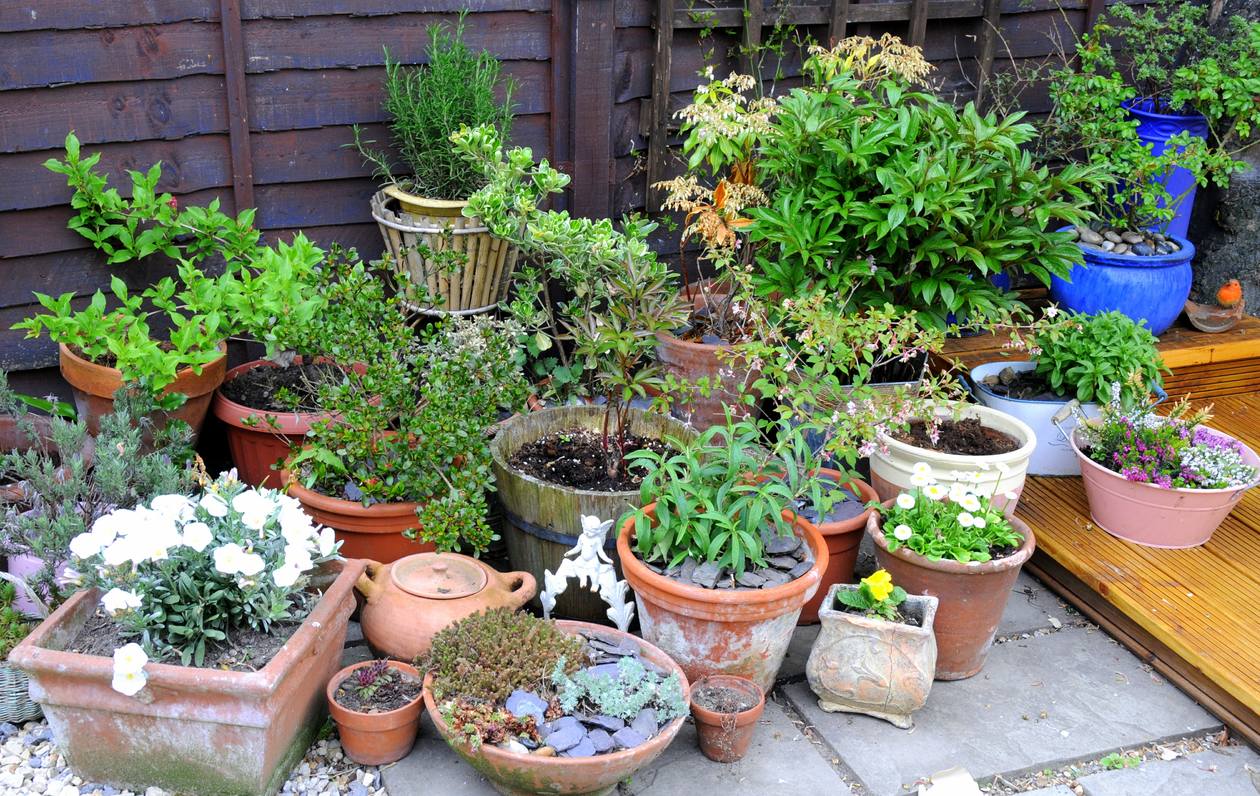
Mixed Herbs and Flowers Container Growing
If you have designed your garden in such a way that you have areas of paving or gravel, you may want to liven these up with some well-planted containers. Equally, if your garden is very small, some strategically placed pots full of colourful flowers may be what you need.
Choosing Your Containers
- Pots are an obvious place to start. They come in all shapes and sizes, glazed, terracotta, hand-painted, stone (real or fake), plaster – you name it. If you intend to leave your pots outside all winter and you live in a cold climate, don’t forget they must be frost resistant. There’s no point buying hand-painted containers in Spain then expecting them to survive a winter in Scotland!
- Troughs look good against a straight wall but you need to choose your planting carefully because I’ve found that many plants quickly become pot bound in a trough. For example, in a trough 24inches (60 cms) long, I have just ONE verbena which is doing very well but it’s foliage reaches to each end and I originally thought that the trough would take at least three plants.
- Wooden containers. You can buy these or make them yourself if you have the skill and you can add a trellis for something to climb up the centre. You can use small split logs for a rustic effect or normal wooden planks for something a little more formal. Don’t forget to leave drainage holes. The wood will last longer if you apply a wood preservative and line your container with plastic.Many wood preservers are coloured these days so your container could be blue or green or whatever you like. The easiest to construct is obviously square, but if you’re a little more adventurous, you could try octagonal or triangular. Divided containers are great for growing herbs.
- Hanging baskets, wall hanging half baskets or pots or hanging pouches are lovely for trailing plants and can create quite a show in summer.
- Basket-shaped or amphora-shaped pots look great but are quite hard to plant and maintain.
- If you have a talent for construction, you could build your own pots or raised beds with bricks or decorative blocks.
Planting Your Containers
There are so many different plants suitable for container gardening that I would need a complete book to name them all. Suffice to say that a small shrub will grow ok in a large pot but won’t want to share will a stack of other things.
Annuals are great for containers but will need to have the spent flowers removed to encourage further blooming. Herbs and alpines are good too but be careful of the sun/shade needed. Be careful also of herbs like mint which can take over a whole flower bed, never mind a pot, left to its own devices.
Unlike, traditional borders, container plants are planted very close together so you need to bear a number of things in mind.
- Buy proprietary compost. Garden borders can, to an extent, obtain nutrients from the soil itself plus leaf mulch and other naturally-occurring organic matter. Containers cannot so buy the best compost you can afford.
- Container plants need a whole lot more water than those in beds. Don’t think that just because it rained all day, much moisture will have penetrated the foliage – it probably won’t. In the height of summer, hanging baskets and the like (unless they have a water reservoir) will probably need watering twice a day.So you have a couple of choices; set up an irrigation system for your pots (optimum but pricey) or add a moisture retaining gel product to your compost (you will still need to water once a day). These are available at garden centres and take the form of a powder which you hydrate into a gel or water retaining balls which look like polystyrene, either of which you mix with the compost.
- You will need to feed container plants more often. You can choose a compost which has already had sufficient nutrients added to last a season which is a good start for annuals. You can also buy slow-release pellets which you mix into the compost in the dosage recommended by the manufacturer. The alternative is to apply a liquid feed once or twice every two weeks throughout the growing season.
OK, so you have your container and you’ve mixed the correct amount of water retention medium and feed into your compost as required, now for the planting.
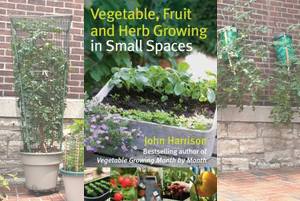
Our bestselling books for growing success!
More Information
FREE SEEDS SPECIAL OFFER
- Try to design the planting on paper or in your minds eye before you start. Remember that trailing plants such as balcony geraniums or surfinia petunias need to be planted around the edge of the container.
- If you’re using baskets, line them with moss and/or a plastic liner. Fill one third with compost, plant the first “layer” of plants which will poke out of the sides of the basket, add the second third and finish with the top “layer”. If you’re using tubs, don’t forget the perspective – tall at the back or side against a wall or fence and smaller at the front.
- Groups of pots look good together, particularly if they’re colour co-ordinated and the addition of a few well-placed pebbles or coloured ornaments completes the effect.
All you need now to enjoy your container garden is a strategically placed table and chairs and a nice chilled glass of white wine!
Article by Michael Russell
Useful Links in the Allotment Shop:
Wooden Planters
Potato Planters
Vegetable & Tomato Planters
Growbag Growing
Herb Planters
Wall & Vertical Planters
Decorative Pots, Planters and Stands
Container Pot & Patio Growing, Flowers, Vegetables, Fruit & Herbs – Information & Advice
- Container Gardening – Container Vegetable Growing
- Container Gardening – General Advice Guide & Tips
- Container Gardening – Protecting Your Plants & Crops From Pests
- Growing Tables for Vegetables, Fruit & Herbs
- The Basics Of How to Plant Container Gardens
- What Vegetables Can You Grow in Containers?
- Winter Care of Container Fruit Trees